
Search
Hot Air Leveling (HAL) for FPC: Characteristics, Design & Production Tips, Applications | Huaruixin Electronics
- Dec 25,2025
-
Share
In the field of Flexible Printed Circuit (FPC) manufacturing, surface finishing processes play a crucial role in ensuring the reliability, solderability, and long-term performance of products. Among the various surface finishing technologies commonly adopted by FPC factories, Hot Air Leveling (HAL) stands out as a classic and widely used option, especially favored for its cost-effectiveness and mature process. As a global ODM/OEM manufacturer specializing in FPC, PCB, and rigid-flex boards, Shenzhen Huaruixin Electronics Co., Ltd. has accumulated rich practical experience in HAL process application. In this blog, we will deeply dissect the characteristics of the Hot Air Leveling process, elaborate on the key details that need attention in FPC design and production, propose targeted solutions to avoid common problems, and explore its extensive application fields. We will also share real-case insights from Huaruixin Electronics to provide valuable references for industry peers and customers.
1. Core Characteristics of Hot Air Leveling (HAL) Process for FPC
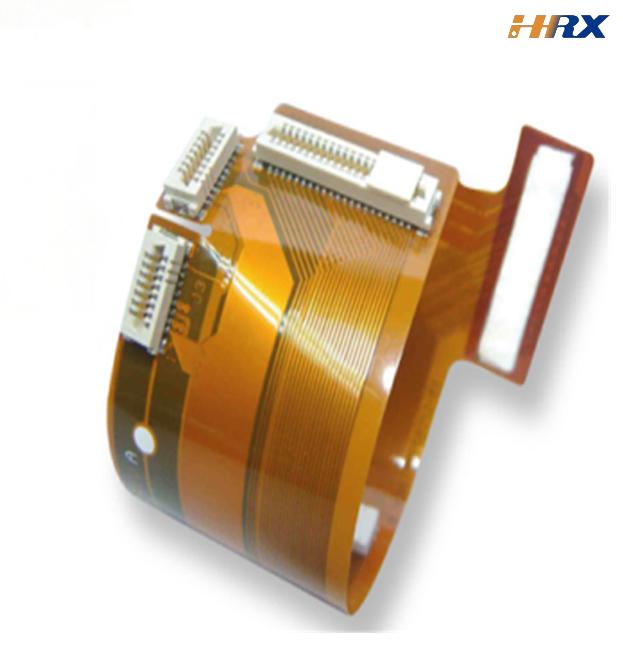
Hot Air Leveling, also known as Hot Air Solder Leveling (HASL) in English terminology, refers to a surface finishing technology that coats the FPC surface with molten solder (traditionally tin-lead, now mostly lead-free) and then uses heated compressed air to level (blow flat) the solder layer. This process forms a uniform coating on the copper surface that not only resists copper oxidation but also provides excellent solderability. At the interface between solder and copper, a copper-tin intermetallic compound (IMC) is formed, which enhances the bonding strength between the solder layer and the FPC substrate.
Based on Huaruixin Electronics' long-term production practice and technical summary, the core characteristics of the HAL process can be divided into distinct advantages and inherent limitations, which are crucial for FPC product design and application scenario selection.
1.1 Key Advantages of HAL Process
- Excellent Long-Term Storage Stability: The uniform solder coating formed by HAL effectively isolates the copper layer from the external environment, preventing copper oxidation and corrosion. FPC products with HAL finishing can maintain good solderability even during long-term storage (usually 6-12 months under proper storage conditions), which is a significant advantage for batch production and global logistics of electronic products.
- Complete Copper Surface Wetting: During the HAL process, the molten solder fully wets the copper surface of the FPC, forming a continuous and uniform coating that completely covers the copper traces. This ensures consistent solderability across the entire board surface, reducing the risk of solder joints failure during the assembly process.
- Compatibility with Lead-Free Soldering: With the global implementation of environmental protection regulations (such as RoHS), lead-free HAL processes (using tin-silver-copper, tin-copper, etc., as solder materials) have been widely popularized. Huaruixin Electronics has fully upgraded its HAL production line to support lead-free manufacturing, ensuring that FPC products meet international environmental standards while maintaining excellent solderability.
- Mature Process & Cost-Effectiveness: As one of the earliest developed surface finishing technologies, HAL has a mature production process, stable equipment operation, and high production efficiency. Compared with other surface finishing processes such as Electroless Nickel Immersion Gold (ENIG) and Immersion Silver (ImAg), HAL has obvious cost advantages, making it the preferred choice for large-batch FPC products with cost-sensitive requirements.
- Favorable for Visual Inspection & Electrical Testing: The HAL solder layer has a distinct metallic luster and uniform appearance, which is convenient for visual inspection of FPC surface defects (such as solder voids, uneven coating, and scratches) during production. At the same time, the good conductivity of the solder layer ensures accurate results in electrical testing (such as continuity testing and insulation resistance testing), helping to improve the pass rate of finished products.
1.2 Inherent Limitations of HAL Process
- Not Suitable for Wire Bonding Applications: The solder layer formed by HAL has a relatively rough surface and poor uniformity in thickness, which cannot meet the precision requirements of wire bonding (a technology used to connect semiconductor chips with FPC traces through fine metal wires). For FPC products that require wire bonding, Huaruixin Electronics usually recommends alternative surface finishing processes such as ENIG or Immersion Tin (ImSn).
- Limitations in SMT Assembly: With the trend of miniaturization and high-density of electronic products, Surface Mount Technology (SMT) requires extremely high surface flatness of FPC. The HAL process may cause slight unevenness of the board surface due to the flow of molten solder, which may affect the alignment accuracy of surface mount components (such as 0201 chips, BGA packages) and the reliability of solder joints. Therefore, HAL is more suitable for SMT products with relatively low component density.
- Incompatible with Contact Switch Designs: For FPC products with contact switch structures (such as flexible keyboard membranes), the solder layer of HAL is relatively hard and has poor wear resistance. During the repeated contact and pressing process, the solder layer is prone to peeling or wear, which affects the contact conductivity and service life of the switch. For such products, Huaruixin Electronics often adopts processes such as gold plating or carbon printing.
- Copper Dissolution & High-Temperature Impact: During the HAL process, the FPC needs to be immersed in molten solder (usually around 240-260°C), which will cause a small amount of copper dissolution from the FPC traces. Excessive copper dissolution may reduce the thickness of the copper layer and affect the current-carrying capacity of the FPC. In addition, the high-temperature environment during HAL may cause thermal deformation of the FPC substrate (especially for thin flexible substrates), affecting the dimensional accuracy of the product.
- Limitations on Extreme Thickness FPC: For FPC with extremely thick (such as thickness > 0.5mm) or extremely thin (such as thickness < 0.1mm) substrates, the HAL process has certain limitations. Thick FPC substrates have poor heat transfer efficiency, which may lead to uneven solder coating; thin FPC substrates are prone to warping and deformation under high temperature, making production operation difficult. Huaruixin Electronics has optimized the process parameters for FPC of different thicknesses to minimize these adverse effects, but it still needs to be carefully considered in product design.
2. Key Details in FPC Design & Production for HAL Process (Tips from Huaruixin Electronics)
To maximize the advantages of the HAL process and avoid potential problems, reasonable design and strict production control are essential. Based on years of production experience, Shenzhen Huaruixin Electronics summarizes the key details that need attention in FPC design and HAL production processes, as well as corresponding problem-avoidance solutions.
2.1 Design Stage Considerations & Problem Avoidance
2.1.1 Trace Design & Solder Mask Layout
In FPC design for HAL, the width and spacing of copper traces should be reasonably designed to avoid uneven solder coating caused by excessive current density or poor solder flow. Huaruixin Electronics recommends that the minimum trace width should not be less than 0.1mm, and the minimum spacing between traces should not be less than 0.1mm. For areas with dense traces, it is necessary to ensure sufficient solder mask opening to allow the molten solder to flow smoothly.
Problem Avoidance: If the trace spacing is too small, solder bridging (short circuit between adjacent traces) may occur during HAL. To avoid this, designers can increase the trace spacing appropriately or add solder mask dams between traces. Huaruixin Electronics' R&D team can provide professional DFM (Design for Manufacturing) suggestions for customers' FPC design drawings, optimizing the trace and solder mask layout to adapt to the HAL process.
2.1.2 Substrate Selection
The selection of FPC substrate has a significant impact on the HAL process. For substrates that are prone to thermal deformation (such as PI substrates with low glass transition temperature), it is necessary to choose materials with good high-temperature resistance. Huaruixin Electronics usually recommends PI substrates with Tg ≥ 260°C for FPC products using HAL, which can effectively reduce thermal deformation during the high-temperature HAL process.
Problem Avoidance: For extremely thin or thick FPC, substrate reinforcement measures can be taken. For example, adding a reinforcing plate at the edge of the thin FPC to improve the rigidity of the board and facilitate production operation; for thick FPC, preheating the substrate before HAL to improve heat transfer efficiency and ensure uniform solder coating.
2.1.3 Avoiding Wire Bonding and Contact Switch Designs
As mentioned earlier, HAL is not suitable for wire bonding and contact switch applications. Therefore, in the early stage of FPC design, if the product has these functional requirements, it is necessary to avoid using HAL and choose more suitable surface finishing processes. Huaruixin Electronics' technical team will communicate with customers in advance to clarify the product's functional requirements and recommend the most appropriate surface finishing solution.
2.2 Production Stage Control & Problem Avoidance
2.2.1 Pre-Treatment of FPC Substrate
The pre-treatment of the FPC substrate before HAL is a key link to ensure the quality of the solder layer. The pre-treatment process includes degreasing, micro-etching, and cleaning, which can remove oil stains, oxides, and other impurities on the copper surface, improving the wettability between the copper layer and the molten solder.
Problem Avoidance: Insufficient pre-treatment will lead to poor solder wettability, resulting in defects such as solder skip and uneven coating. Huaruixin Electronics has established a strict pre-treatment quality control system, using automatic pre-treatment equipment to ensure consistent processing parameters (such as micro-etching time, temperature, and cleaning pressure) for each batch of FPC. At the same time, the company conducts regular testing of the pre-treated copper surface to ensure that its surface roughness and cleanliness meet the HAL process requirements.
2.2.2 Optimization of HAL Process Parameters
The key process parameters of HAL include solder temperature, immersion time, and hot air pressure. Different FPC substrates and thicknesses require different parameter settings. For example, for thin PI FPC, the solder temperature can be appropriately reduced (around 240-245°C) and the immersion time shortened (3-5 seconds) to avoid thermal deformation; for thick FPC, the solder temperature can be increased to 250-260°C and the immersion time extended to 5-8 seconds to ensure full solder wetting.
Problem Avoidance: Huaruixin Electronics uses advanced automatic HAL production lines with real-time monitoring of process parameters. The company has established a parameter database based on years of experience, covering various types of FPC products. For new products, the technical team will conduct trial production to determine the optimal process parameters, avoiding problems such as excessive copper dissolution, uneven solder coating, and substrate deformation caused by improper parameters.
2.2.3 Post-Treatment and Quality Inspection
After the HAL process, the FPC needs to go through post-treatment processes such as cooling, cleaning, and drying to remove residual solder and flux. Then, strict quality inspection is carried out, including visual inspection, thickness measurement of the solder layer, solderability testing, and electrical testing.
Problem Avoidance: Residual flux may cause corrosion of the FPC surface, affecting product reliability. Huaruixin Electronics uses environmentally friendly flux and advanced cleaning equipment to ensure thorough removal of residual flux. For quality inspection, the company adopts a combination of manual visual inspection and automated testing equipment (such as AOI - Automated Optical Inspection) to detect defects such as solder voids, bridging, and uneven coating in a timely manner. For unqualified products, the technical team conducts root cause analysis and takes corrective measures to avoid recurrence.
2.3 Case Sharing: HAL Process Optimization for a Wearable Device FPC
A customer of Huaruixin Electronics needed to develop a flexible FPC for a wearable device, requiring cost-effective surface finishing and good solderability. Initially, the customer's design had dense traces (minimum spacing 0.08mm) and a thin substrate (thickness 0.1mm), which led to solder bridging and substrate deformation during the initial HAL trial production.
To solve these problems, Huaruixin Electronics' technical team took the following measures: 1. Optimized the customer's design, increasing the trace spacing to 0.1mm and adding solder mask dams between adjacent traces; 2. Selected a high-temperature-resistant PI substrate (Tg 280°C) to replace the original substrate; 3. Adjusted the HAL process parameters, reducing the solder temperature to 242°C and shortening the immersion time to 3 seconds, while increasing the hot air pressure appropriately to improve the flatness of the solder layer.
After optimization, the trial production was successful. The FPC products had no solder bridging, the substrate deformation was within the allowable range (≤ 0.5mm), and the solderability and storage stability met the customer's requirements. This case fully demonstrates the importance of reasonable design and process optimization for the application of the HAL process in FPC production.
3. Application Fields of HAL-Finished FPC Products
Due to its cost-effectiveness, mature process, and good solderability, HAL-finished FPC products are widely used in various electronic fields, especially in products with relatively low requirements for surface flatness and no wire bonding needs. Based on Huaruixin Electronics' customer cases and market research, the main application fields are as follows:
3.1 Consumer Electronics
Consumer electronics is the largest application field of HAL-finished FPC. Products such as remote controls, audio equipment, small household appliances (such as electric toothbrushes, hair dryers), and low-end mobile phone accessories (such as earphone cables, battery connectors) often adopt HAL surface finishing. These products have large production volumes and high cost sensitivity, which are perfectly matched with the advantages of HAL's low cost and high efficiency.
For example, Huaruixin Electronics provides HAL-finished FPC for a well-known home appliance brand's remote control products. The FPC needs to have good solderability for connecting buttons and integrated circuits, and the production volume reaches 1 million pieces per month. The HAL process ensures stable product quality and low production cost, winning high recognition from the customer.
3.2 Automotive Electronics
In automotive electronics, HAL-finished FPC is used in non-critical components such as automotive audio systems, air conditioning control panels, and door lock control modules. These components have relatively low requirements for high-temperature resistance and precision, and the HAL process can meet their reliability and solderability requirements. With the development of automotive electrification, the demand for FPC in the automotive field is increasing, and HAL, as a cost-effective surface finishing option, still occupies a certain market share.
Huaruixin Electronics has passed the IATF 16949 automotive quality management system certification, and its HAL-finished automotive FPC products have passed strict environmental reliability tests (such as high and low temperature cycle, humidity and heat resistance, and vibration tests), meeting the quality requirements of the automotive industry.
3.3 Industrial Control Equipment
In industrial control equipment, such as ordinary sensors, relays, and control panels, HAL-finished FPC is widely used. These equipment usually work in relatively stable environments, and the requirements for FPC surface finishing are mainly focused on solderability and cost. The HAL process can ensure the reliable connection of FPC with other components, and its mature process is conducive to the long-term stable supply of industrial control equipment.
3.4 Medical Devices (Non-Precision Components)
For non-precision medical devices, such as ordinary medical monitors, infusion pumps, and medical power supplies, HAL-finished FPC is also a common choice. These devices require FPC to have good biocompatibility and reliability, and the lead-free HAL process adopted by Huaruixin Electronics can meet the environmental and safety requirements of the medical industry.
3.5 Notes on Application Scope
It should be emphasized that for high-precision electronic products such as smartphones (high-density SMT), wearable devices with wire bonding, and aerospace electronic components, HAL is not the optimal choice due to its limitations in surface flatness and precision. For these products, Huaruixin Electronics recommends surface finishing processes such as ENIG, ImAg, or Immersion Tin, which can better meet the high-precision and high-reliability requirements.
4. Choose Huaruixin Electronics for Your HAL-Finished FPC Needs
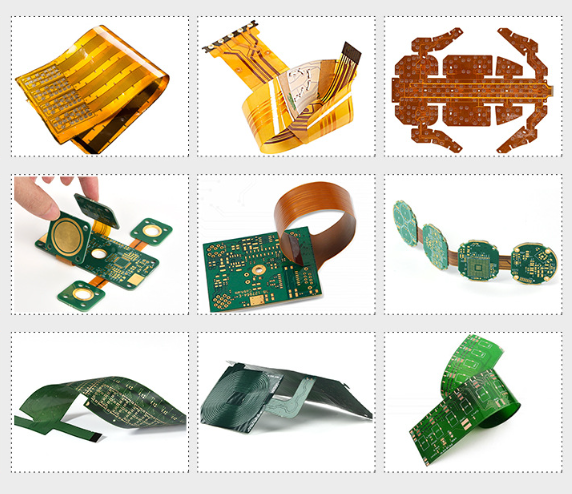
As a professional global ODM/OEM manufacturer of FPC, PCB, and rigid-flex boards, Shenzhen Huaruixin Electronics Co., Ltd. has rich experience and mature technology in the application of the Hot Air Leveling process. We have a professional R&D team that can provide DFM suggestions for customers' FPC designs, optimizing the design to adapt to the HAL process and avoid potential problems. Our advanced automatic HAL production lines and strict quality control system ensure that each batch of products has stable quality and consistent performance.
Whether you need cost-effective HAL-finished FPC for consumer electronics, automotive electronics, or industrial control equipment, Huaruixin Electronics can provide customized solutions to meet your specific requirements. We also have in-depth research and application experience in other surface finishing processes, and can recommend the most suitable technology according to your product's functional requirements and application scenarios.
If you have project needs, we, as a professional manufacturer, welcome you to contact us at any time. For more industry knowledge and technical information, you can visit our website: www.hrxfpc.com or email us at: sales@hrxfpc.com to communicate, learn, and get guidance together.

Let’s talk! We’ll provide the perfect solution for you!
-
 Huaruixin Electronics mainly produces printed circuit boards as the core business, to provide customers with one-stop solutions for FPC/PCB production, components sourcing and Assembly.
 - WHAT WE DO — PCB Design Solutions — Flex PCB Production — Components Sourcing — FPC&PCB Assembly
- PRODUCTS — Single Sided Flexible Circuits — Double Sided Flexible Circuits — Multilayer Flexible Cirucits — Rigid-Flex Circuits — FPC Assembly — PCB Assembly
- CAPABILITY — FPC Capability — Rigid-Flex Capability — PCB Capability — Assembly Capability
- Copyright © 2024 Shenzhen Huaruixin Electronics Co., Ltd. All Rights Reserved.
- Design By BONTOP