
Search
Stretchable FPC: Professional Design, Production, and Quality Inspection Guide for 2026
- Jun 30,2026
-
Share
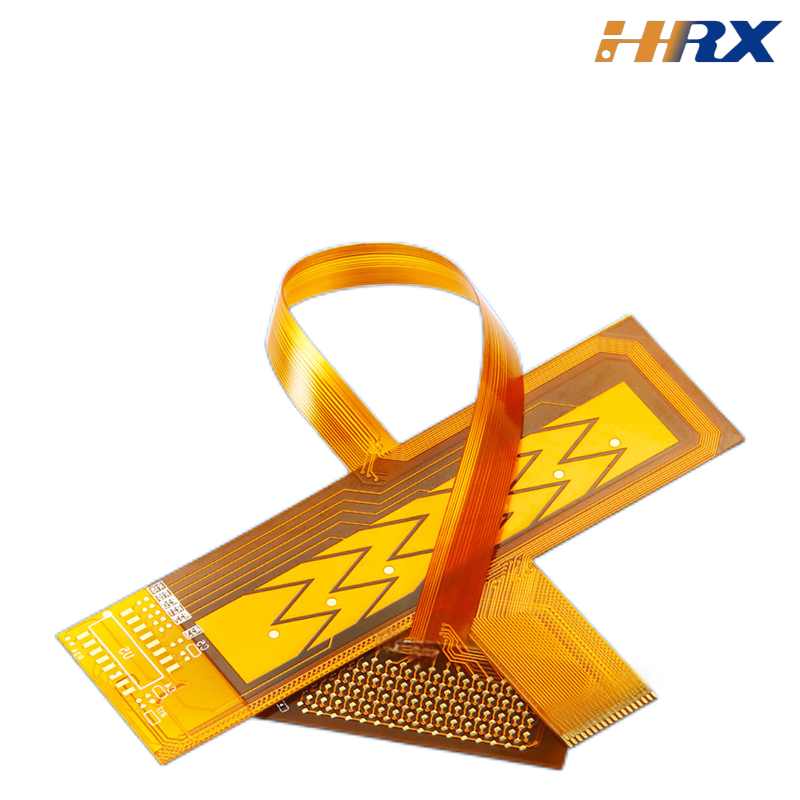
Fueled by the explosive growth of wearable gadgets, flexible medical equipment, foldable displays, and smart automotive flexible systems,stretchable FPC (stretchable flexible printed circuit) has become an indispensable core interconnection component for next-generation flexible electronics. Unlike standard flexible PCBs that only support basic bending, professional stretchable FPC delivers excellent tensile, torsional, and resilient deformation performance, solving critical limitations of rigid PCBs and conventional FPCs in dynamic flexible application scenarios. As a trusted global FPC, PCB, and rigid-flex board ODM/OEM manufacturer, Shenzhen Huaruixin Electronics Co., Ltd. possesses rich field experience and unique forward-looking insights in stretchable FPC customization, precision manufacturing, and quality stability optimization. This in-depth guide explores standardized stretchable FPC design logic, high-precision production workflows, and rigorous quality inspection protocols from a professional designer’s perspective, sharing practical industry optimization tips to help engineering teams eliminate development risks and boost product yield and service reliability.
1. Designer-Centered Stretchable FPC Core Design Principles & DFM Optimization
Product design determines the ultimate stretch performance, fatigue life, and scenario adaptability of every stretchable FPC. In actual project customization, over 80% of stretchable FPC mass production failures stem from unreasonable DFM design and mismatched material selection, rather than production process errors. Based on massive customized project cases, Huaruixin Electronics summarizes exclusive DFM optimization specifications for stretchable FPC, fully matching commercial mass production and high-stretch dynamic working conditions.
1.1 Professional Material Selection for Stretchability Compatibility
Conventional PI substrates for ordinary FPCs cannot withstand large tensile deformation, easily causing substrate cracking, trace fracture, and layer delamination. For qualified stretchable FPC design, engineers must select high-elasticity, fatigue-resistant base materials with stable tensile recovery. Dominant high-performance options include TPU (Thermoplastic Polyurethane) elastic substrates, silicone composite films, and modified stretchable PI materials, enabling reversible tensile deformation ranging from 50% to 300%. For conductive layers, ultra-thin rolled copper foil and high-ductility stretchable silver paste are prioritized to balance stable electrical conductivity and mechanical stretchability, avoiding the poor fatigue resistance of traditional electrolytic copper foil used in standard FPCs.
Huaruixin Exclusive Suggestion: Stretchable FPC material matching must be scenario-oriented instead of pursuing excessive stretch coefficients blindly. TPU-based stretchable FPC is cost-effective and stable for low-frequency stretching wearable consumer products; modified stretchable PI substrates are highly recommended for medical-grade and industrial high-frequency dynamic equipment to enhance high-temperature resistance and anti-aging performance of stretchable FPC finished products.
1.2 Structural Layout & Stress Relief Design Core Rules
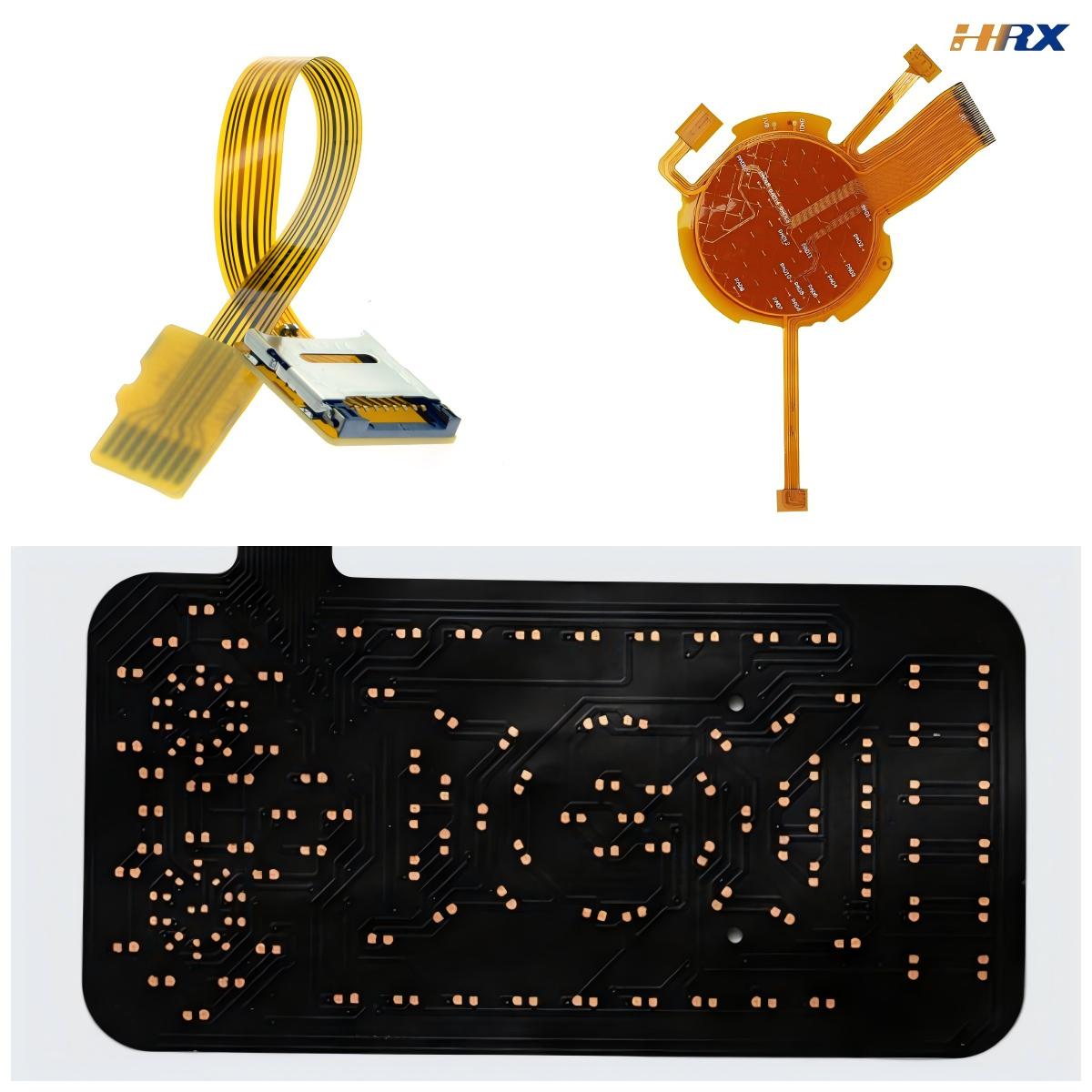
Stress concentration is the leading cause of stretchable FPC failure during repeated stretching and torsion cycles. In layout design, strictly divide stretchable FPC functional areas including stretchable zones, flexible bending zones, and rigid reinforcement zones in accordance with IPC-2223 industry standards. Never arrange vias, component pads, or dense trace arrays in core stretchable zones. Adopt optimized serpentine trace routing, full arc transition wiring, and gradient trace width structures to replace rigid right-angle linear wiring, which effectively disperses tensile stress and triples the anti-fatigue service life of stretchable FPC circuits.
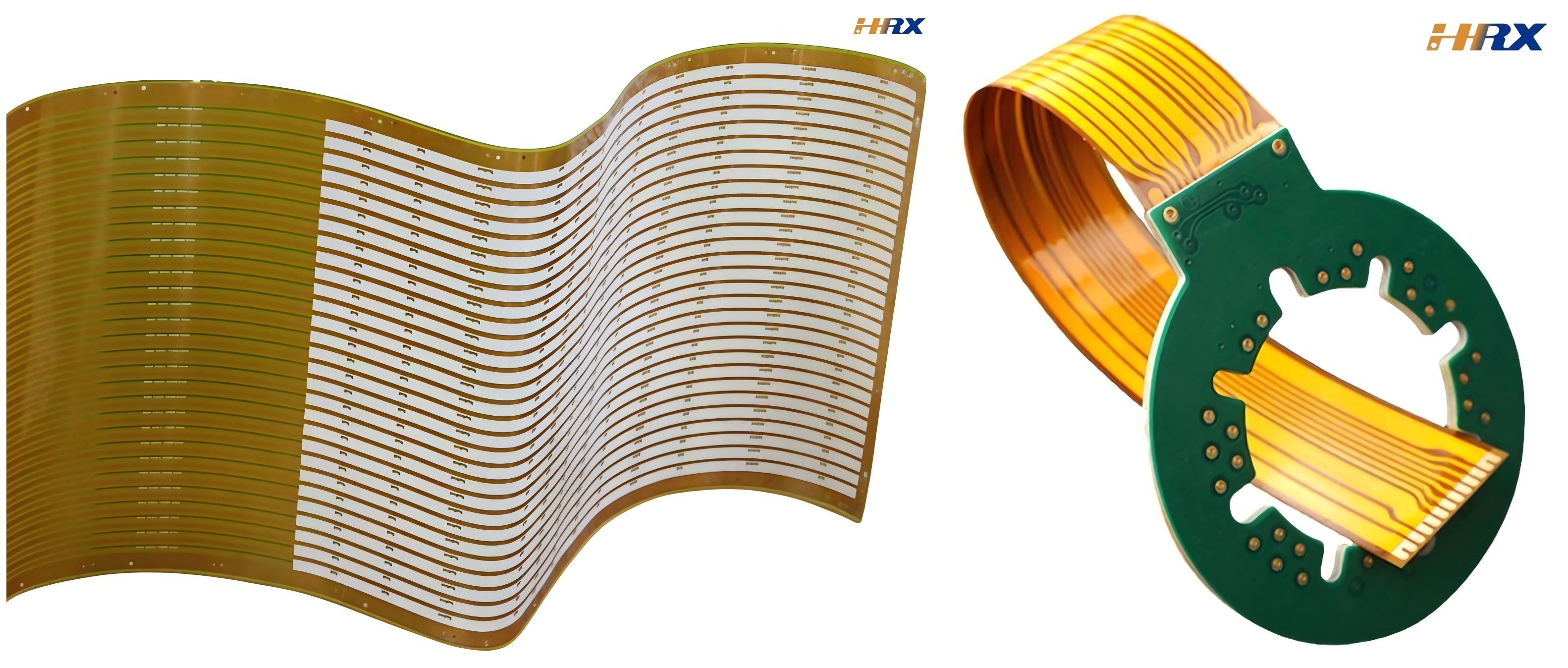
Furthermore, add standardized stress relief notches and full rounded corner treatments on stretchable FPC board edges, and install independent stiffener reinforcements for welding and fixed functional areas to isolate rigid-flex transition stress. For multi-layer stretchable FPC products, apply asymmetric layer stacking and elastic interlayer dielectric filling to prevent interlayer delamination caused by inconsistent tensile deformation of each circuit layer.
1.3 Parameter Standardization for Stretch Tolerance Matching
Designers need to preset targeted stretch tolerance parameters based on the actual stretch frequency and amplitude of end products. For static low-stretch scenarios, control the minimum bending radius and single tensile deformation within 50%; for high-frequency dynamic scenarios such as human joint wearable devices, customize stretchable FPC to support 100%+ cyclic stretching and reserve a 20% stretch safety margin to avoid mechanical fatigue failure. Meanwhile, optimize high-frequency impedance matching for stretchable FPC traces to prevent signal attenuation and impedance drift during deformation, ensuring consistent electrical performance of flexible electronic systems.
2. Precision Production Process of Stretchable FPC: Yield & Stability Optimization
Stretchable FPC features a far higher manufacturing threshold than conventional FPC due to its elastic substrate and deformable circuit structure, requiring stricter control over lamination, etching, surface finishing, and molding processes. As a professional ODM/OEM manufacturer with full independent production chains, Huaruixin Electronics optimizes exclusive batch production processes for stretchable FPC, effectively solving industry pain points including low mass production yield, inconsistent stretch performance, and easy layer delamination.
2.1 Substrate Lamination & Pretreatment Process
Elastic substrates such as TPU and silicone films for stretchable FPC have low dimensional stability and are prone to thermal shrinkage and deformation during high-temperature processing. We adopt low-temperature vacuum lamination and constant-temperature stress relief pretreatment for all stretchable FPC base materials to eliminate internal material stress. Precise calibration of lamination temperature, pressure, and duration ensures uniform bonding between conductive copper layers and elastic substrates, fundamentally avoiding interlayer hollowing and delamination during subsequent stretch testing and actual service.
2.2 Precision Etching & Trace Forming Technology
Ultra-thin stretchable copper traces of stretchable FPC are vulnerable to over-etching and micro-breakage in traditional etching processes. We deploy a customized differential precision etching process and optimize etching solution concentration and dynamic spraying parameters. Combined with high-precision automated pattern exposure, this technology ensures uniform trace width and smooth edge flatness for serpentine stretch circuits, greatly improving the structural consistency of each stretchable FPC batch and reducing trace failure rates.
2.3 Post-Processing & Stretch Adaptability Treatment
For surface treatment of stretchable FPC, we adopt low-stress gold plating, tin plating, and conductive adhesive coating processes compatible with elastic structures, avoiding rigid surface layers that restrict substrate stretching and deformation. All finished stretchable FPC products undergo professional constant-temperature aging and stress relief treatment to stabilize tensile recovery performance and eliminate process residual stress, ensuring long-term stable mechanical and electrical performance after millions of repeated stretch cycles.
Huaruixin Industry Insight: The core bottleneck limiting large-scale commercial application of stretchable FPC is unstable batch consistency. Most manufacturers only verify prototype stretch performance but ignore standardized batch parameter calibration. We strongly recommend industry practitioners build exclusive process parameter libraries for different stretchable FPC material grades and stretch indicators, realizing full-process parameterized control to raise mass production yield above 98%.
3. Strict Quality Inspection & Testing Standards for Stretchable FPC
Conventional FPC testing standards cannot fully verify the comprehensive performance of stretchable FPC. Professional quality inspection for stretchable FPC focuses on three core dimensions: mechanical stretch reliability, in-deformation electrical stability, and long-term fatigue resistance. Huaruixin Electronics establishes a full-link testing system covering incoming material inspection, in-process sampling inspection, and finished product full inspection, fully compliant with IPC-A-600 and IPC-2223 international stretchable FPC industry specifications.
3.1 Dimensional & Visual Precision Inspection
We deploy full-scan AOI (Automated Optical Inspection) to detect stretchable FPC surface defects, including micro cracks, residual copper, coating defects, and irregular board edges that are invisible to naked eyes. High-precision dimensional measuring equipment verifies stretch zone tolerance and overall structural consistency to ensure all finished stretchable FPC products strictly comply with design drawing standards.
3.2 Electrical Performance Testing
Professional flying probe testers and automatic electrical testing equipment conduct full-range continuity tests, insulation resistance tests, and impedance calibration for each stretchable FPC. We verify no open circuit, short circuit, or insulation breakdown occurs in both static and maximum stretching states, ensuring electrical parameter fluctuations remain within the standard deviation range during stretchable FPC deformation.
3.3 Mechanical Stretch Fatigue Testing
Fatigue stretch testing is the most critical verification item for stretchable FPC quality. We simulate real end-product application scenarios via professional fatigue testing machines, conducting 10,000 to 1,000,000 cyclic stretching, torsion, and bending tests according to customized project requirements. Only stretchable FPC products with a resistance change rate below 10% and zero structural damage after cyclic testing are qualified for delivery.
3.4 Environmental Reliability Testing
We perform high-low temperature cycle tests, constant humidity aging tests, and environmental durability tests on stretchable FPC to verify performance stability in complex working environments. This process eliminates potential risks of performance attenuation and structural failure for stretchable FPC applied in wearable medical devices and outdoor industrial flexible equipment.
4. Huaruixin’s Unique Industry Optimization Suggestions
After years of serving global clients in consumer flexible electronics, medical devices, smart wearables, and automotive electronics, Shenzhen Huaruixin Electronics Co., Ltd. summarizes three targeted optimization suggestions for the stretchable FPC industry, helping clients shorten R&D cycles, control comprehensive costs, and enhance product market competitiveness:
First, adopt stretchable FPC design-production-inspection integrated customization. Most project delays and failures result from disconnection between design schemes and mass production processes. Design teams must communicate deeply with professional stretchable FPC manufacturers in the early R&D stage, abandoning over-designed unprocessable structures to realize perfect synergy of design for production and design for quality.
Second, balance stretchable FPC stretch performance and manufacturing cost. Extreme high-stretch materials and ultra-precision processes will greatly increase production costs. For most civilian and industrial scenarios, customized moderate-performance stretchable FPC can fully meet application demands and effectively reduce unnecessary expenditure.
Third, prioritize long-term fatigue reliability over single stretch limit performance. The core application value of stretchable FPC lies in stable long-term dynamic operation. It is essential to add standardized fatigue reliability testing to product certification procedures to avoid after-sales failures of end products.
5. Professional Stretchable FPC ODM/OEM Customization Service
Shenzhen Huaruixin Electronics Co., Ltd. is a reliable global ODM/OEM manufacturer specializing in high-quality FPC, PCB, rigid-flex circuit board, and customized stretchable FPC solutions. We own a professional stretchable FPC engineering design team, fully automated production lines, and a complete independent testing laboratory, supporting full-service customization from prototype proofing, small-batch trial production to large-scale mass production. We provide one-stop tailored solutions including scheme design, material selection, process optimization, and full-standard quality testing for all types of stretchable FPC projects.
If you have ongoing stretchable FPC project development, customization, and mass production demands, feel free to contact our professional technical and sales team at any time. To acquire more professional stretchable FPC industry knowledge, technical parameters, and real project cases, please browse our official website: www.hrxfpc.com. You can also send technical consultation and cooperation emails to sales@hrxfpc.com for in-depth industry communication, project guidance, and business cooperation. We sincerely look forward to long-term win-win cooperation and common progress with global industry partners!

Let’s talk! We’ll provide the perfect solution for you!
-
 Huaruixin Electronics mainly produces printed circuit boards as the core business, to provide customers with one-stop solutions for FPC/PCB production, components sourcing and Assembly.
 - WHAT WE DO — PCB Design Solutions — Flex PCB Production — Components Sourcing — FPC&PCB Assembly
- PRODUCTS — Single Sided Flexible Circuits — Double Sided Flexible Circuits — Multilayer Flexible Cirucits — Rigid-Flex Circuits — FPC Assembly — PCB Assembly
- CAPABILITY — FPC Capability — Rigid-Flex Capability — PCB Capability — Assembly Capability
- Copyright © 2024 Shenzhen Huaruixin Electronics Co., Ltd. All Rights Reserved.
- Design By BONTOP